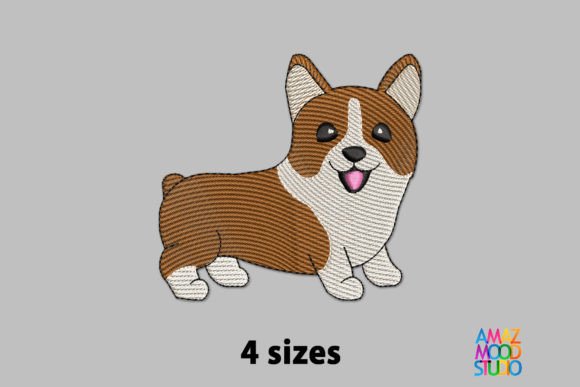
Cute Dog Corgi: A Designer’s Review for Business Merch
As an embroidery designer who has spent years digitizing and reviewing files for commercial use, I approach every new machine embroidery design with a critical eye. It is not just about whether a motif looks cute on a screen; it is about how it performs on fabric, how it holds up in the wash, and most importantly, how it serves the brand identity of the small business owner using it. Today, I am taking a close look at the Cute Dog Corgi design. This piece falls squarely into the Dogs category, but its application extends far beyond simple pet lover apparel. For boutique owners, Etsy sellers, and creative studios, this embroidery file represents a potential asset for branded merchandise, provided it is used with strategic intent.
First Impressions: Balancing Playfulness with Professionalism
The immediate visual impact of Cute Dog Corgi is undeniably friendly. The description notes that this "cute corgi embroidery will add a lovely accent to any fabric," and from a design perspective, this suggests a focus on approachability. In the world of small business merch, approachability is currency. Whether you run a local bakery, a pet grooming salon, or a cozy café, your brand needs to feel welcoming. This design leans into that warmth. However, "cute" can sometimes risk looking amateurish if the digitizing is poor. My initial assessment looks for clean lines and balanced proportions. Does the corgi look like a generic clipart conversion, or does it have the thoughtful stitch placement required for a premium finished product? The promise of "multiple embroid" options in the description is a strong positive signal, suggesting versatility in sizing or format, which is crucial for adapting one design across various products.
Real-World Applications for Small Business Merchandise
Let us move beyond theory and discuss where Cute Dog Corgi actually works in a commercial setting. The versatility of this design makes it a strong candidate for several key categories of custom apparel and accessories.
- Branded Patches: This is perhaps the strongest use case. An embroidered patch featuring this corgi can be sewn onto denim jackets, canvas tote bags, or even laptop sleeves. Patches allow customers to buy into your brand identity without committing to a full garment. For pet brands, this is a high-margin add-on item.
- Staff Uniforms and Aprons: For cafés or bakeries, apron embroidery adds a touch of handmade charm. Placing the corgi on the chest pocket area creates a friendly focal point. It softens the professional look of a uniform, making staff appear more approachable to customers.
- Cap Embroidery: A small version of this design on the front of a baseball cap can serve as a subtle brand mark. However, this requires careful attention to detail, which I will address in the technical notes below.
- Tote Bag Design: Canvas totes are staples for boutiques and markets. A larger scale of the Cute Dog Corgi centered on a tote bag transforms a simple utility item into a walking advertisement for your shop.
When used in these contexts, the design stops being just a picture of a dog and becomes a tool for customer engagement. It signals that your brand values quality, creativity, and a personal touch.
Technical Considerations and Production Risks
While the aesthetic appeal is high, any experienced embroiderer knows that beauty lies in the execution. There are specific scenarios where Cute Dog Corgi must be used with caution. Understanding stitch density and fabric interaction is vital before you commit to a large production run.
First, consider the size. If you plan to use this as a tiny logo on a polo shirt collar or a small hat front, you must verify that the details do not collapse. Fine details in the corgi’s face or fur texture may merge together if the design is scaled down too far. Always check the minimum recommended size provided with the digital embroidery file. If that information is missing, you must test it yourself.
Second, think about fabric texture. This design likely performs best on smooth, stable fabrics like cotton twill, polyester blends, or felt. Using it on highly textured materials like thick wool or loose-knit sweaters might result in lost definition. Similarly, dark uniforms require careful selection of thread colors. If the corgi has light tan or white areas, you may need an underlay or a backing patch to ensure the colors pop against black or navy fabric.
Third, curved surfaces present a challenge. Cap embroidery requires specialized digitizing to account for the curvature of the crown. If this file was not specifically digitized for caps, it may distort when hooped. Always review the hoop compatibility. If the design is wide, it may not fit standard cap frames without resizing, which could compromise quality.
Enhancing Brand Identity and Customer Trust
Why does the choice of embroidery matter for your bottom line? It comes down to perceived value. A printed logo can fade and crack. An embroidered design, however, conveys durability and craftsmanship. When a customer sees Cute Dog Corgi stitched onto a high-quality tote or apron, they associate that tactile quality with your brand. It builds trust. It suggests that you care about the details.
For handmade brands and Etsy sellers, consistency is key. Using this design across multiple design assets—from packaging tags to social media mockups—creates a cohesive visual language. It helps customers recognize your brand instantly. Furthermore, offering items with this embroidery can justify a higher price point. Consumers are often willing to pay more for items that feel bespoke and durable, rather than mass-produced.
Practical Notes for the Embroidery Professional
Before you launch this design into your product line, follow these practical steps to ensure success. These are the checks I perform on every new file before approving it for client work.
- Test in Monochrome: Stitch out the design in black thread on white fabric first. This reveals the true structure of the digitizing without the distraction of color. If it looks good in black and white, it will look good in color.
- Check Stabilizer Requirements: The right stabilizer is non-negotiable. For stretchy fabrics like t-shirts, use a cut-away stabilizer. For woven fabrics like tote bags, a tear-away may suffice. Incorrect stabilization leads to puckering, which ruins the professional look of the Cute Dog Corgi.
- Create a Printable Mockup: Before stitching, place the design digitally onto photos of your actual products. This helps you visualize scale and placement. Does it look too crowded on the pocket? Is it lost on the back of a jacket?
- Verify Commercial Licensing: This is critical. Ensure that the license included with the machine embroidery design allows for commercial use. You need to know if there are limits on the number of physical items you can sell. Never assume; always read the terms.
- Inspect Thread Contrast: Choose thread colors that align with your brand palette. Do not just pick random colors because they look like a corgi. If your brand is minimalist, consider a monochromatic stitch. If your brand is vibrant, use bold contrasts to make the design stand out.
In conclusion, Cute Dog Corgi is a promising asset for small business owners looking to add personality to their merchandise. It bridges the gap between playful charm and professional branding when handled with technical care. By respecting the limitations of fabric, hoop size, and stitch density, you can transform this simple Embroidery file into a powerful tool for brand growth. Whether you are creating gifts for loyal customers or stocking your online shop with unique apparel, this design offers the versatility needed for modern commercial embroidery projects. Just remember to test, stabilize, and license correctly, and your finished products will reflect the quality your customers expect.